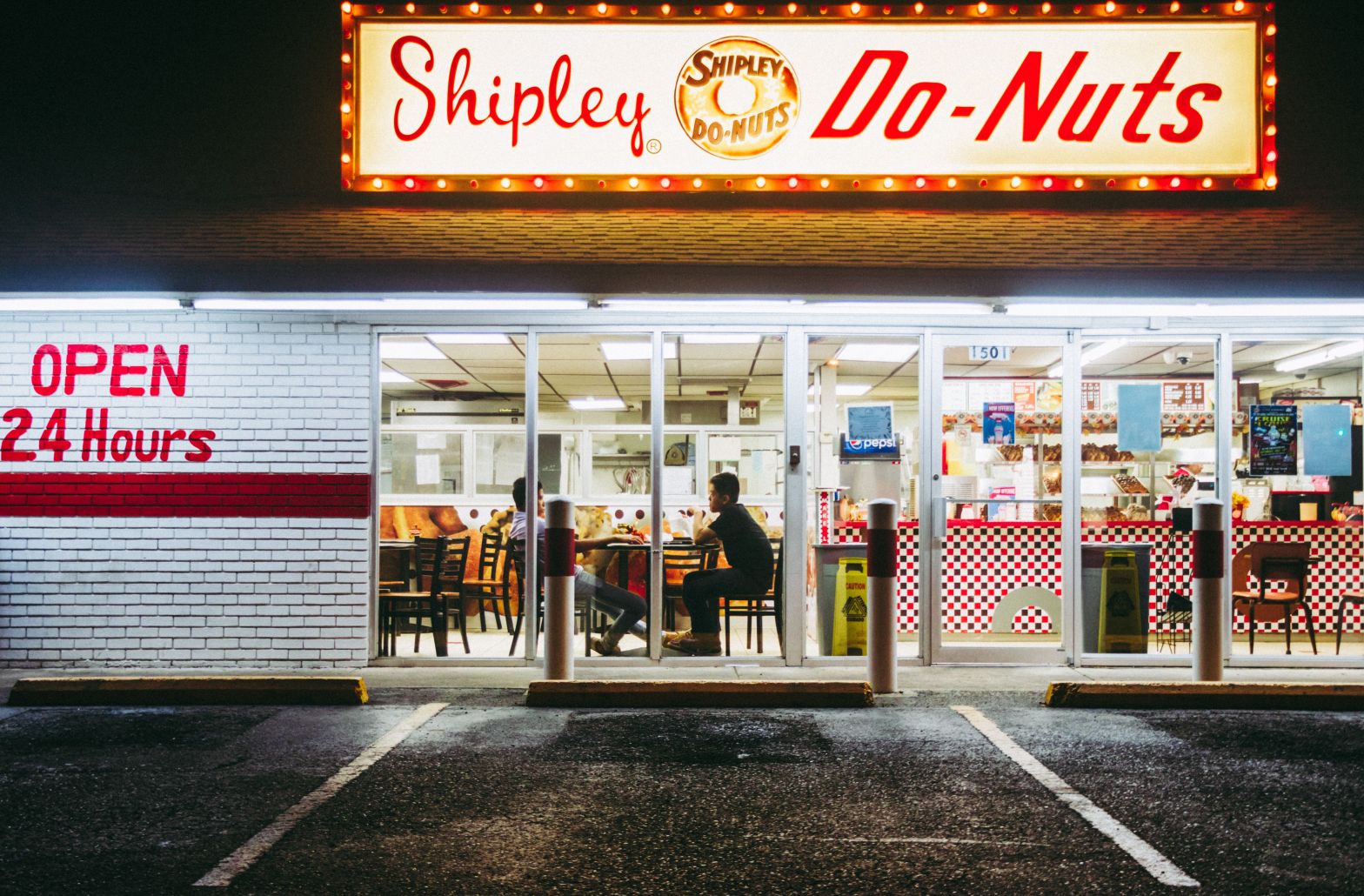
I read a post on LinkedIn recently about the tradition of police officers eating donuts. It explained that the routine arose in the 1950s out of necessity. Cops needed a place to take a break during their late night shifts and the only place open was the local donut shop. Donut shop owners and operators appreciated the business during a slow time of day and also appreciated the police presence during hours that sometimes lead to crime or neighborhood disruption.
And along the way, police officers and donut shop owners built relationships, connection, and trust.
And while the arrangement was mutually beneficial for the two parties, it actually had an even bigger impact. It contributed to community, safety, and a culture of connection for the entire neighborhood.
Part of how they did this was just by being present. When people see others out and about, they feel safer and more willing to be out and about as well. This creates a healthy cycle whereby more people feel comfortable stepping out, even in questionable areas or at late hours.
Unfortunately, most locally owned donut shops have long since shuttered, and many police departments are short staffed resulting in less time for community engagement work. And to top it off, connection has dropped off considerably in the last couple of generations.
But building community doesn’t have to be difficult or expensive. It starts with members of the community being present, visible, and engaged. It can be as simple as sitting in the front window of your locally-owned coffee shop, spending time in the local park with your friends or family, or working in the flower flower garden in your own front yard. You could walk your dog, or push your kids in the stroller through your neighborhood, catch up with your neighbors on your front porch or in your driveway, or shovel a neighbor’s driveway, mow their lawn, or weed their flower beds. The goal is simple: be visible.
Once you’ve mastered the visibility component, you can turn your attention to the engagement part. Being engaged in your community can be as easy as attending a local event, volunteering with your favorite organization, or even starting your own gathering. How about a setting up a Euchre game at the local watering hole, a Scrabble tournament at the library, or a chess match in the park? What about a walking, running, or hiking club? Join (or start) a bowling league. Invite others to join you in the park for sunrise yoga. Build and stock a little free library. Visit the residents at your local senior citizen center. The options are literally endless.
So what sorts of real community already exist in your community? Which ones will you attend? And which ones will you initiate? Because community doesn’t happen when we wait for others to do it. It happens when we all get out there and do our part, one chess match, coffee break, and Scrabble game at a time.

