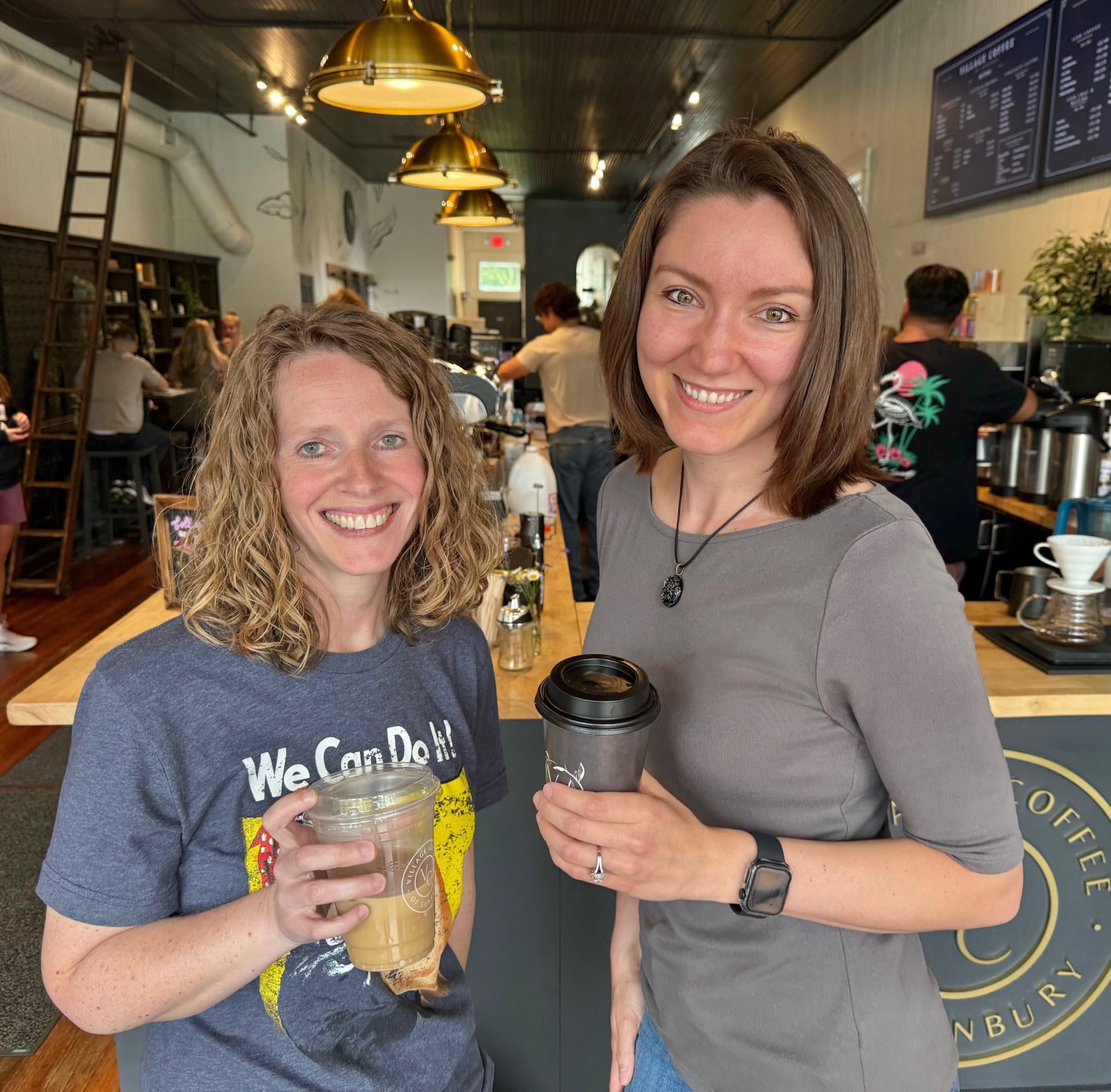
It was breezy and threatening rain on a Saturday morning in June when I met Sarah Kundla and her partner in life and business, Joel, to compare notes on our experiences with leadership, business, and team coaching. Inside Village Coffee of Sunbury, though, it was warm and cozy. The place was literally buzzing with activity. This atmosphere likely contributed to the creative and thought-provoking conversation we shared over coffee and pastries.
Collaboration over Competition
Since Sarah and I are working in similar circles, you might think we would want to keep our “secret sauce(s)” to ourselves. After all, aren’t we competing for the same clients? We decided to take a different approach, though, one we both encourage for the teams, leaders, and business owners we coach and mentor. We made a commitment to each other to share broadly and deeply about how we run our businesses, because we have seen time and again in our work that when business leaders do so in a space of common trust, positive business outcomes naturally follow close behind.
Which brings me to leadership assessments. Sarah is certified to administer and coach Gallop’s CliftonStrengths Assessment (formerly called Clifton Strengths Finder) and builds a majority of her team coaching work around this powerful model. Narrowing her focus like this provides Sarah with a deep level of expertise that many coaches, consultants, and workshop facilitators can’t offer. Sarah chose to focus on this tool because of its strengths-based approach, which research indicates is more successful than weakness-focused approaches. CliftonStrengths helps us tackle business and relationship challenges through the lens of what we’re good at, encouraging us to think about how we can leverage those strengths to improve business and team outcomes.
Because my work has become more diverse in the last several years, branching out from the tech space into community, small business, and non-profit spaces, I tend use a number of assessments in my work, some custom and some pre-packaged. Most recently, though, I have become a certified administrator for Leadership Circle Profile. I chose to invest in this model because I am impressed with the robust 360-degree assessment, deep research behind the model, and the attention to the strategic (or creative) competencies necessary for personal, leadership, and business improvement.
An Overview of CliftonStrengths and Leadership Circle Profile
Sarah and I were interested in how the two assessments complement each other, where they might differ, how they might best be used, and how we could leverage them to bring our client’s insights that can result in tangible and positive change in their careers and with their teams. Accordingly, we took each other’s assessments and then debriefed each other. I have to admit that I found this super fun and informative and really appreciated Sarah’s coaching on my own tendencies.
One thing this activity did for me was to reinforce my belief that assessments are only as good as the coaches who administer them. Lucky for me, Sarah is clearly well-versed in CliftonStrengths! Her deep knowledge of the model was evident and appreciated as we discussed the strengths I tend to interact with the world through. I also really appreciated the “what to watch out for” sections that were included in my report. They helped me see where my strengths might not be showing up the way I intend for them to and how I might shift my mental model to improve outcomes.
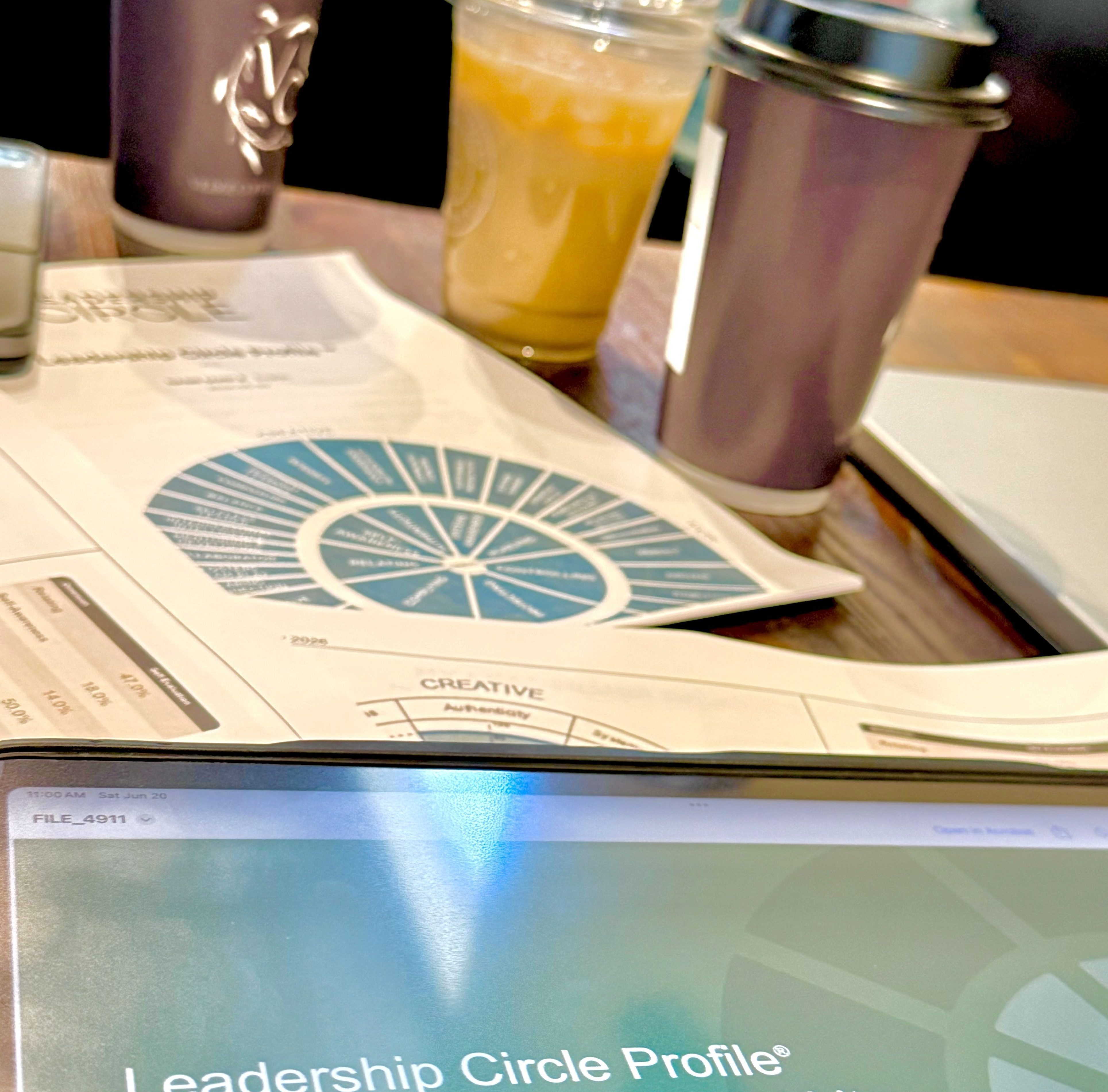
When I shared Sarah’s Leadership Circle profile results, both Sarah and Joel commented on how comprehensive the results are. The assessment covers 18 creative competencies and 11 reactive tendencies, all organized in a circle, a pie-shaped grid that makes the complex information easy to understand. We had some fun comparing Sarah’s and Joel’s results, where we could clearly see their preferred types of work and working styles. Both Sarah and Joel found areas in their results that they wanted to further explore and began to consider behaviors they could begin to experiment with in an attempt to shift their outcomes at work and in life.
We only had a few short hours to explore the two assessments, but we could easily see how both assessments could unlock extensive development opportunities when packaged with an extended workshop or a long-term coaching engagement.
Sarah often wraps a 1/2 day or full day workshop around CliftonStrengths, although she also offers more in-depth packages. I offer a “Lite” version of the Leadership Circle Profile with a one-hour debriefing session and a comprehensive version supported by 6-month and 12-month coaching packages.
Similarities and Differences between CliftonStrengths and Leadership Circle Profile
Both assessments focus on improved outcomes for individuals, leaders, and teams, but they approach this work from different perspectives.
CliftonStrengths is a self-assessment focusing on innate characteristics, those that are inherited and largely unchanging over time. It approaches leadership and team development through the lens of our strengths, that is, how we can leverage our strengths to deliver improved outcomes.
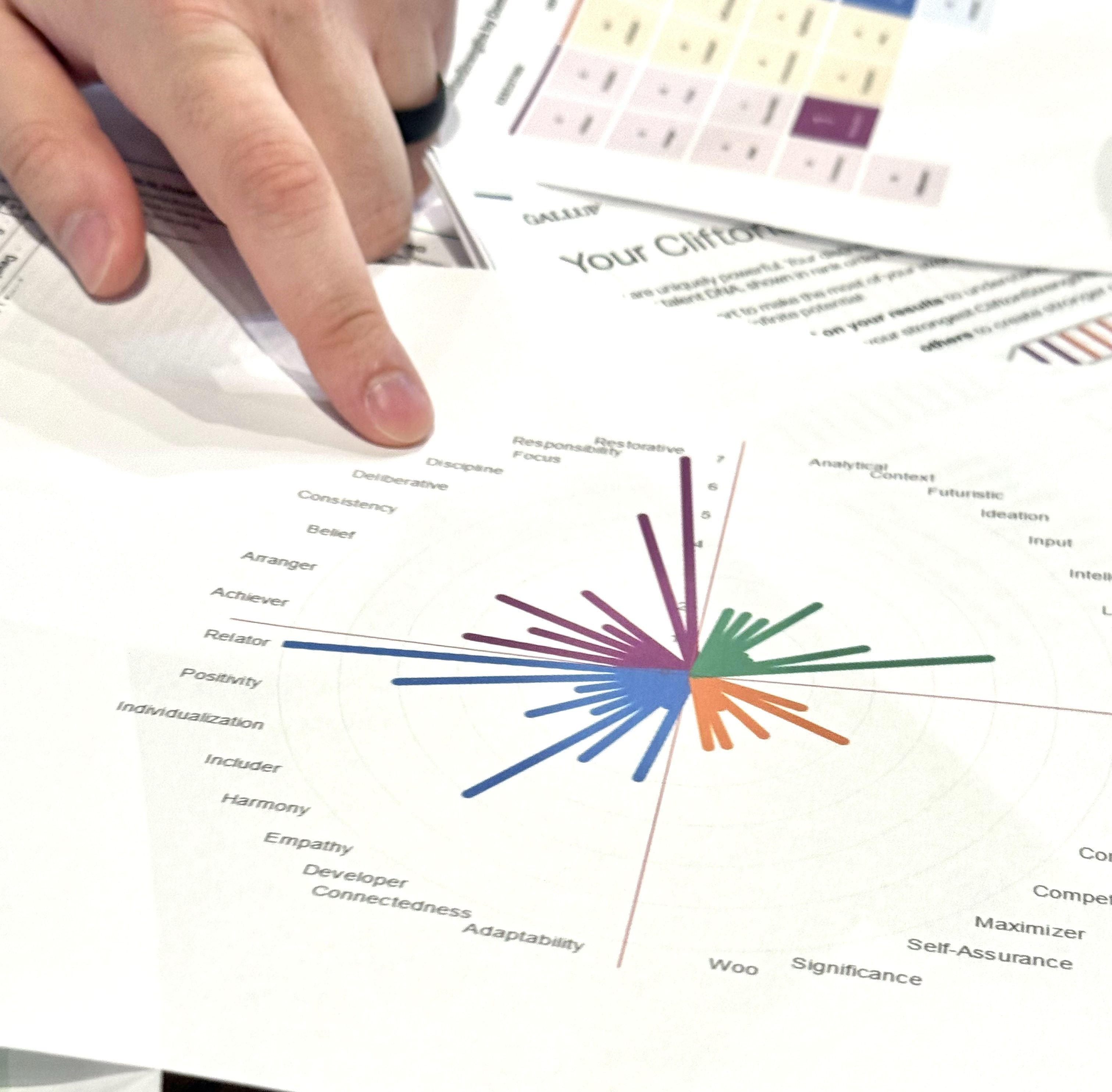
Meanwhile, the Leadership Circle Profile provides both a self assessment and a 360-degree assessment from your peers, boss, bosses’ boss, and former bosses. It also places your results in context with the results of other leaders from around the world who have also taken the assessment. Also, in contrast to CliftonStrengths, Leadership Circle Profile focuses on acquired characteristics, those that are learned and can be changed with growth and over time to improve outcomes.
I compiled the table below to give you an overview of the similarities and differences we observed in the two approaches.
| Feature | CliftonStrengths | Leadership Circle Profile |
| Self assessment | X | X |
| 360-degree assessment | X | |
| Individual assessment | X | X |
| Team Assessment | X | X |
| Comparison to a broader leadership cohort outside of your team or organization | Demonstrates how rare or common an individual leader’s top 10 strengths combination is | Benchmarks an individual’s leadership scores against a global norm database of over 4 million 360-degree assessments |
| Number of characteristics assessed | 34 | 29 |
| Strengths-based | X | Emphasizes strengths, but also surfaces weaknesses |
| Type of characteristics assessed | Innate (inherited, largely unchanging and consistent over time) | Acquired (learned, changing with growth and over time) |
| Open-ended questions for evaluators provide text-based feedback from peers, bosses, and former bosses | X | |
| Price Point | $ | $$ |
Want to know more about either of these approaches? Schedule a quick chat with either Sarah or me below:
Sarah: https://www.questinginsight.com/training-services
Nicole: https://nicolederr.com/contact/
P.S. You should also check out what Sarah had to say about our discussion. She shared it on her blog here: https://www.questinginsight.com/post/so-you-want-to-grow-but-where-do-you-start

