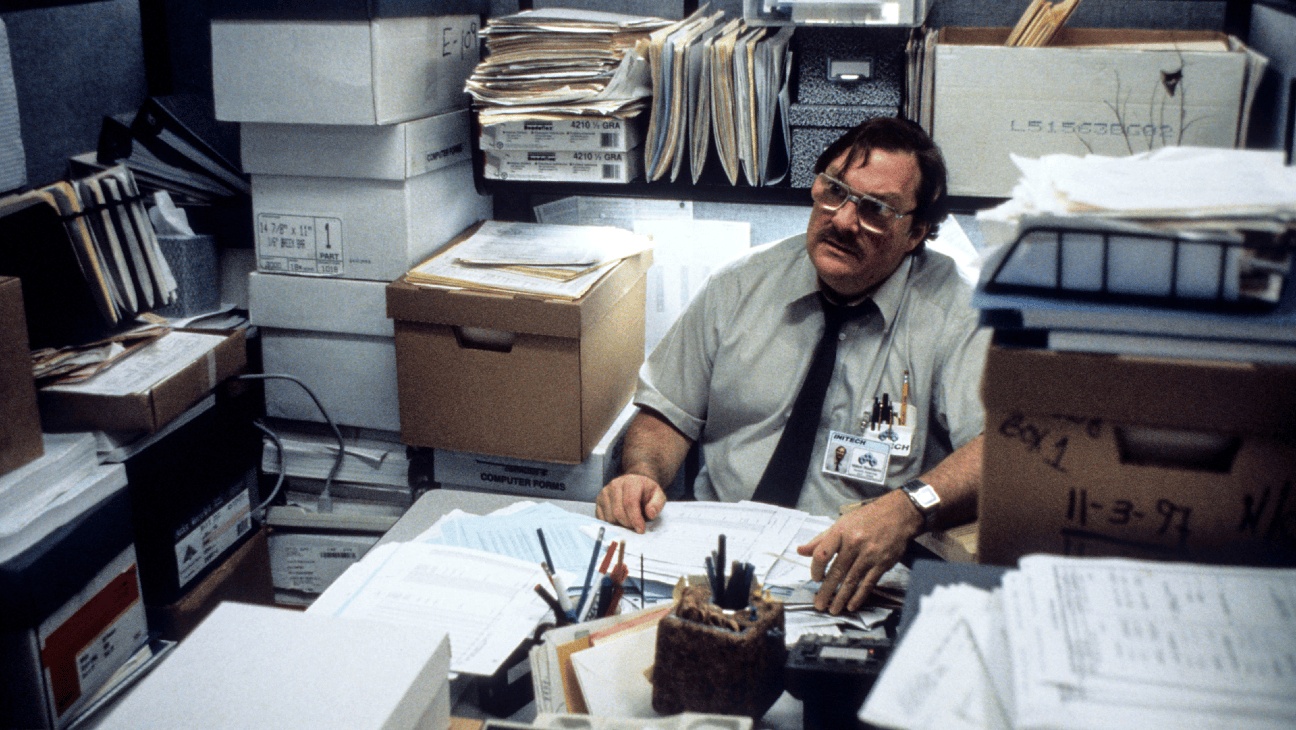
“You spend your whole life stuck in the labyrinth, thinking about how you’ll escape it one day, and how awesome it will be, and imagining that future keeps you going, but you never do it. You just use the future to escape the present” — John Green, Looking for Alaska
I joined a banned book club a few months back and for December we’re reading Looking for Alaska by John Green. And it has me wondering why I haven’t read more books written for young adults. Wow.
Between Alaska Young and Coyote Sunrise, I’m starting to think that the deepest messages in literature for those stuck in mid-life, workplace hell are actually in books written for people much younger than us. Who knew?
It turns out the corporate hellscape of 2020’s mid life is not unlike the hormone-fueled angst of late adolescence and early adulthood. Mid-life is sort of like going through puberty, but in reverse.
It’s true, we’re living in a time where the majority of us feel trapped in a system that demands more and more and gives less and less in return. We dream about the day when we can finally retire, or even just take a brief vacation, but the work, bills, and debt continue to pile up as we slog through day after day, one harder-than-it-should-be task after another, until we fall into bed at night, exhausted and worrying about what the next day holds.
Late at night, unable to sleep, we scroll endlessly past pictures, stories, and ads that paint a future where we can step off this always-on treadmill, but in reality, we see no realistic way to make it happen. Modern society has become a giant bait and switch scheme and we’re all the unwitting victims.
We’ve allowed a system rigged against us to convince us that the best way to survive, let alone thrive, is to rely on the biggest companies, to put all of our quality-of-life eggs in their “too big to fail” baskets and to wait with bated breath for the annual cost-of-living raise, the Christmas bonus, the 401k match, all after shareholder dividends are paid out, of course.
We’ve allowed that same system to convince us that we need the biggest houses, the newest gadgets, and the shiniest cars, and endless digital subscriptions. Putting this all together, we’re left with little control over our own destiny, stuck in jobs that don’t serve us or our communities because we have too much debt and not enough income. We’re lost in the labyrinth, the exit (future) all but a far-off dream.
We don’t have to live this way. We can break free, start anew, exit the labyrinth, and step into our futures. But it requires us to face that future head on. We have to be willing to take the risk, let go of the false sense of security, and really see the fabricated world around us for what it is.
Because real security doesn’t come from a far off corporation, a CEO in an ivory tower, or a stock market built on smoke and mirrors. It comes from real connection with actual human beings who we spend time with, who we know intimately, and can trust to support us in the same ways we support them. It comes from living as part of a genuine, in-real-life community, not the virtual ones we find on Facebook and LinkedIn that are full of bots and scammers. I mean the type of community where the stock market is replaced with real commerce taking place in our town squares, on our main streets, and in our small and locally owned businesses and where inflammatory zingers, shots across the internet bow, are replaced with genuine conversations full of honesty, vulnerability, and an interest in true understanding.
I’m not trying to say it’s going to be easy to transition back to the world of in-real-life community, but I am trying to say it’s what we all need to thrive. And in the end, aren’t we all worth the investment?
So the next time you’re daydreaming of a future where you’re free of the corporate labyrinth, maybe pause and think about what it would take to get out, to step into a future where we all thrive as a result of our work together to build resilient, networked communities where we each have a hand in each other’s success, where we’re all working toward a common goal, where we know, respect, and depend on our neighbors instead of a handful of corporate oligarchs.
Whether we realize it or not, this is the future we dream about and deserve. And it’s out there for our taking if we’re just willing to step out of the labyrinth.

